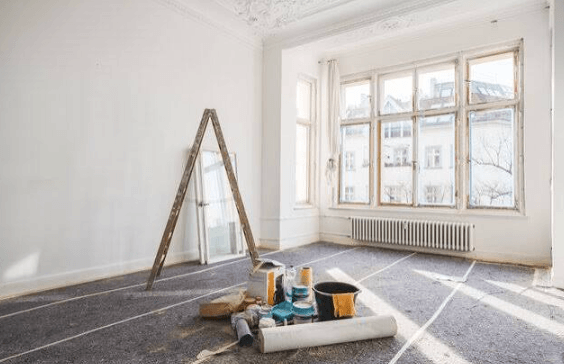
For a long time, I was a purist about buying renovation materials in person. I wanted to touch the tile, heft the vanity, squint at the flooring under the store lights. Ordering building materials online felt reckless, like buying shoes without trying them on. Then I renovated two bathrooms back to back, one the old way and one the new way, and the comparison changed my mind for good.
I’m not going to pretend online shopping is perfect for everything. It isn’t. But my stubborn insistence on doing it all in person was costing me time, money and sanity that I didn’t need to spend. Here’s what changed, and where I landed.
The tyranny of the in-person shop
Let me describe the first bathroom, done the traditional way. I made four separate trips to compare tile. I drove across town twice because an item was out of stock. I stood in aisles trying to remember what a vanity at another store had cost. I bought the wrong quantity of tile because I estimated in my head, then had to make a fifth trip.
None of this felt wasteful in the moment. Each trip had a reason. But added up, I spent the better part of two weekends just sourcing materials, before a single thing got installed. And because I was comparing from memory, I almost certainly overpaid on at least two items I never lined up side by side.
The in-person experience sells itself on the idea that you’re making better decisions by seeing everything. In practice, I was making scattered decisions across fragmented visits, with no easy way to compare.
The second bathroom, done differently
For the second bathroom, I forced myself to start online. I sat down one evening, opened a catalogue, and built the entire project in tabs. Tile, vanity, mirror, fixtures, accessories, all visible at once, all with prices and specs.
The difference was startling. In about an hour, I had compared more options than I’d managed in two weekends of driving. I could see exactly how much tile I needed from the coverage-per-box figures instead of guessing. When you check out Entrepôt de la Réno and its collections this way, the whole project sits in front of you as a coordinated set, which makes it obvious when two finishes clash or when a price is out of line. I caught mistakes on screen that I’d have discovered too late in person.
I still didn’t buy everything blind. For the two items where colour truly mattered, the tile and the vanity finish, I ordered samples. That’s the piece that makes the whole approach work.
Where online genuinely wins
Having done both, the online advantages are concrete, not theoretical. Price comparison is the obvious one. Lining up options side by side exposes gaps that memory hides. I saved real money simply by seeing everything at once.
Quantity accuracy is the second win. Product pages list coverage per box, so calculating how much to order becomes arithmetic instead of guesswork. Fewer shortages, less costly surplus. The third is sheer catalogue breadth. An online selection dwarfs what any single physical aisle can hold, so I found options I’d never have encountered in a store.
And then there’s the calm of it. No closing times, no crowds, no salesperson hovering. I made better decisions unhurried at my kitchen table than I ever did under fluorescent lights with a lineup forming behind me.
See also: Finding a real AHK-Cu telehealth program in 2026, and spotting the ones that aren’t
Where in-person still matters
I’m not a convert who pretends the store is obsolete. Some things need to be seen. Colour is the big one. A tile that looks warm grey on a screen can turn cool grey installed, and no monitor is perfectly calibrated. For anything where the exact shade or texture is critical, I still want a physical sample in the actual room’s light.
Immediate availability is the other advantage. When I ran short of grout mid-project, I wasn’t waiting three days for a delivery. I drove to the nearest store and had it in twenty minutes. For fillers and last-minute needs, physical retail is unbeatable. Big-box stores like Home Depot and RONA exist for exactly these moments.
The point isn’t that one channel beats the other. It’s that they solve different problems, and using the wrong one for a given task is what wastes your time.
The mistake I almost made twice
There’s one error I nearly repeated on the second bathroom, and it’s worth flagging because it’s the trap most online shoppers fall into. Emboldened by how smoothly the comparison went, I was tempted to order everything on screen, including the tile, without seeing a sample first.
I caught myself just in time. The tile I’d chosen looked like a soft greige on my monitor. The sample that arrived was noticeably cooler, closer to a flat grey, and it would have clashed with the warm vanity finish I’d already selected. Had I ordered the full quantity based on the screen, I’d have faced either living with a mismatch or eating the cost and delay of a return.
That near-miss crystallized the rule for me. Online shopping is spectacular for comparison, quantities and breadth, but screens lie about colour. They’re calibrated differently, lit differently, and can’t reproduce how a finish behaves in your specific room’s light. The discipline that makes online work is knowing exactly which decisions require a physical sample and refusing to shortcut them.
So the lesson isn’t just to shop online. It’s to shop online but never trust a screen for the handful of choices where colour is everything. That distinction is the whole game.
The method I use now
Here’s how I approach every project since. I start online for the heavy lifting: comparison, quantities, building the coordinated look. I order samples for the handful of items where colour or texture is make-or-break. Once those are confirmed, I place the big order online, ideally early enough to cover delivery lead times. Then I keep a small budget for the inevitable last-minute runs to a physical store.
This hybrid isn’t a compromise, it’s the best of both. I get the comparison power and calm of shopping online with the sensory check and instant availability of in-person retail, each used where it’s actually strongest.
Looking back, my in-person purism wasn’t principled, it was just a habit I’d never questioned. The materials didn’t get worse when I moved most of the process online. My weekends got longer, my budget stretched further, and I made fewer mistakes. If you’re still doing it all the hard way out of loyalty to how it’s always been done, I’d gently suggest running the experiment I did. The second bathroom taught me more than the first, and most of the lesson was about how I was shopping, not what I was buying.
