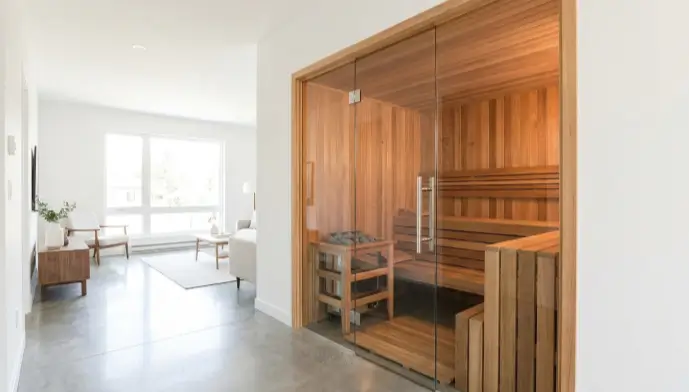
traditional indoor sauna is typically run at 170°F to 180°F for 15 to 20 minutes, while an indoor infrared cabin runs cooler, around 120°F to 140°F, for sessions of 30 to 45 minutes. The right choice between the two comes down to heat tolerance and how much time you have, and both differ from outdoor sauna habits mainly in how quickly the room reaches temperature and how session timing fits around a household’s daily schedule.
Traditional heat versus infrared: how do the temperature ranges compare?
A traditional indoor cabin heats the air and the stones, so the room needs to climb well past 150°F before the session feels like a real sauna, with most home users settling on 170°F to 180°F once they’re past the beginner stage. That heat builds quickly indoors, since the cabin isn’t losing warmth to outdoor wind or cold air the way a backyard unit does, so a 15-minute session can feel just as intense as a 20-minute session outdoors.
Infrared panels work differently. They warm your body directly rather than heating the room air, so a comfortable session runs at a noticeably lower 120°F to 140°F. People who find high heat hard on their breathing or who want to read or listen to something during a longer session tend to prefer infrared for exactly this reason. Neither temperature range is more effective than the other; they simply deliver heat differently, and an indoor cabin lets you dial in either style without weather working against the heater.
Morning sessions versus evening sessions: which timing fits better?
Morning sessions tend to run shorter, 10 to 15 minutes, and people use them for alertness before a workout or the workday. Evening sessions before bed are more common overall, especially with lower infrared temperatures, since the gradual cooldown afterward can support the drop in core body temperature that helps with falling asleep. The one timing mistake worth avoiding is a very hot, very long session right before bed, since it can leave you overheated and wired rather than relaxed.
Households with more than one person using the sauna often find a simple rotation works best: one adult in the morning before work, a shared evening slot on weekends, and a shared calendar or a sign on the door so nobody walks in mid-session. Because the unit sits inside the house rather than across the yard, coordinating timing is easier, but it also means noise, running water, and door traffic near the sauna room are more noticeable to the rest of the household.
What does good indoor sauna etiquette actually look like?
Sit on a towel rather than directly on the wood benches, both for hygiene and because bare skin against hot cedar or hemlock can be uncomfortable at higher temperatures. Rinse off before entering if you’re wearing lotion, sunscreen, or heavy deodorant, since these can smoke or leave a residue on hot surfaces. Keep phones, laptops, and outside shoes out of the room, and if the sauna shares a wall with a bedroom or home office, be mindful of heater cycling noise during early morning or late-night sessions.
If you’re deciding between a compact two-person cabin and a larger four-person build for a shared household, it’s worth thinking through how many people will actually use it at once versus in sequence, since a bigger footprint changes both the etiquette and the electrical planning. You can compare models here to see how bench layout and heater size differ across cabin sizes built for solo use versus a family rotation.
How should beginners pace their first few sessions?
Start around 10 minutes at the lower end of whichever temperature range your cabin uses, and stop earlier if you feel lightheaded, nauseated, or unusually fatigued. Add two to three minutes per session over a few weeks rather than jumping straight to a 20-minute traditional session at 180°F. Staying hydrated before and after matters more than most people expect, since a 15-minute session at high heat can produce a noticeable fluid loss through sweat.
A systematic review of dry sauna bathing found consistent associations between regular, moderate sauna use and improvements in perceived recovery and cardiovascular markers, though the review is clear that these are observed associations rather than guaranteed individual outcomes. Pacing yourself into a routine, rather than treating early sessions as an endurance test, is part of why regular users report sticking with the habit longer than people who start too hot and too long.
How does using an indoor sauna alone compare with using it with a partner?
Solo sessions give you full control over temperature and timing, which makes them easier for beginners still figuring out their tolerance. A quiet solo evening session, with a book or nothing at all, is also where most people report the strongest wind-down effect before bed. Sessions with a partner or friend change the dynamic: conversation tends to shorten the useful heat exposure, since talking distracts from noticing how your body is responding, and it’s common for one person to want to leave the cabin well before the other. A reasonable etiquette rule for shared sessions is agreeing on a target time before you start rather than negotiating it once the heat sets in, since decision-making gets harder the longer a session runs.
Couples and housemates who use an indoor cabin together regularly often settle into a rhythm where one session a week is shared and the rest are solo, which tends to keep both the etiquette and the temperature preferences simpler than trying to accommodate two different comfort levels every time.
Frequently Asked Questions
What temperature should an indoor sauna be set to?
A traditional indoor heater is typically run between 150°F and 190°F, with most home users settling around 170°F to 180°F. Indoor infrared cabins run cooler, usually 120°F to 140°F, since the panels heat the body directly rather than the surrounding air.
How long should a session in an indoor sauna last?
Most sessions run 15 to 20 minutes for a traditional heat sauna and can stretch to 30 to 45 minutes for lower-temperature infrared cabins. Beginners should start around 10 minutes and add time gradually as they learn how their body responds.
Is morning or evening a better time to use an indoor sauna?
Both work, and it comes down to personal routine. Morning sessions tend to be shorter and used for alertness, while evening sessions before bed are more common for winding down, provided the session ends early enough that the drop in body temperature afterward supports rather than disrupts sleep.
What is the etiquette for sharing an indoor sauna with family or housemates?
Sit on a towel rather than bare skin on the wood, knock or check a shared calendar before entering if the room is used by multiple people, keep phones and outside shoes out, and rinse off before re-entering if you have applied lotion or sunscreen.
Should you shower before or after using an indoor sauna?
A quick rinse before helps remove lotions and oils that can smoke on hot wood or heater surfaces. A cooler shower afterward helps your body temperature normalize and rinses off sweat before you sit on furniture or get into bed.
References
- Effects of heat and cold on health, with special reference to Finnish sauna bathing, American Journal of Physiology – Regulatory, Integrative and Comparative Physiology, 2018
- Benefits and risks of sauna bathing, The American Journal of Medicine, 2001
- Does the Combination of Finnish Sauna Bathing and Other Lifestyle Factors Confer Additional Health Benefits? A Review of the Evidence, Mayo Clinic Proceedings, 2023
By Priya Nandakumar
